
Plan and record tapping work
Manage blocks, tapping tasks, teams, and schedules. Field work records (BKM) capture work, latex and lump output, material use, and tapping-quality findings.
Connect tapping work, receiving, rubber quality, and company costs.
Symphony helps rubber companies manage estate upkeep, tapping schedules, tapper output, purchases from farmers, receiving, processing, and sales. These records connect with inventory, payroll, and finance so results and costs can be evaluated on a consistent basis. FieldMate helps teams record work on their phones, including when there is no signal. Insight lets management monitor results, costs, and documents awaiting approval. AI assistance helps users review and understand the data.
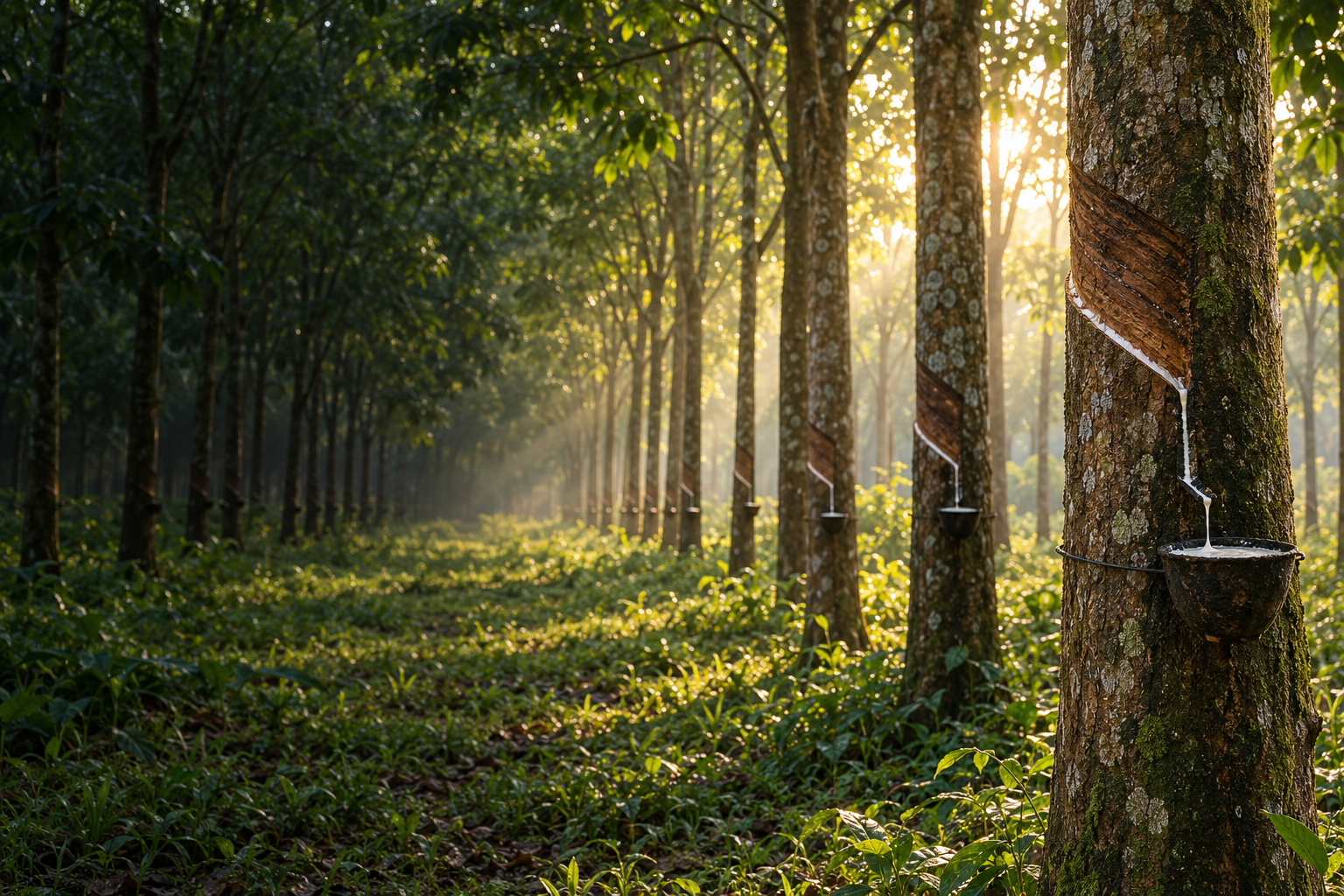
Manage blocks, tapping tasks, teams, and schedules. Field work records (BKM) capture work, latex and lump output, material use, and tapping-quality findings.
Record estate output or purchases from farmers, cooperatives, and agents. Weight and dry rubber content (DRC/KKK) support quality checks and calculations under company rules. Different material forms are recorded separately for meaningful comparisons.
Attendance, tapping output, and work inspections support wage and tapper-incentive calculations. Teams can trace payroll inputs and cost allocation before authorised processing.
Processing records, laboratory results, and stock by grade help teams follow rubber output. Purchases, material consumption, labour, and sales connect with finance to support cost and budget reviews.
Symphony helps connect farmer and supplier-plot data with purchases and product-lot records. Source plots, locations, and product movements help companies prepare traceability information for EUDR requirements.
Own estates and supplier farms are recorded with GPS, area, village, planting year and certification to trace rubber origin.
Smallholders, cooperatives and agents as suppliers, with purchase prices and a purchase recap.
Weigh tickets, deductions and grading rules; purchase prices are calculated from the DRC of every delivery.
BKM tapping per task and tapper, tapping system and frequency, stimulant use, latex and lump output, tapper premiums and tapping-quality inspections.
Superior rubber clones and budded nursery through the nursery module.
Records of tapping opening, panels and bark consumption per block.
Monitoring white root disease and leaf fall with thresholds and follow-up.
Latex and lump intake with DRC, then crumb rubber (SIR), RSS or latex concentrate processing in logsheets, lab analysis, stock per grade and cost.
Commodity sales contracts, loading orders, deliveries and shipments.
Commodity sales contracts, loading orders and shipments in euro, US dollar or rupiah, with daily exchange rates, currency revaluation and EUDR traceability data.
THE SYMPHONY ADVANTAGE
Symphony combines connected modules, plantation industry experience, and implementation support. Our team helps align the deployment with the needs of your estates, mills, and office teams.
Manage finance, taxation, purchasing, inventory, sales, HR, estates, and mills in one integrated system. FieldMate and Insight connect field operations with management needs.
With more than 15 years of experience, Symphony understands plantation management needs, from field activities to administration, finance, and management reporting.
Symphony has a track record of 100% implementation success. This experience underpins how we help companies implement a system that supports their business processes.
Symphony ERP is designed for the needs of large plantation companies, while also serving small and medium-sized plantations with fair pricing tailored to their needs and scale of operations.
GET TO KNOW SYMPHONY
Book a demo to see how Symphony connects estate operations, mills, and finance in one system. Our team will discuss your company's needs, help identify suitable modules, and explain the implementation process and proposal.