Plantation Accounting Software: 7 Features Estates Need
Generic accounting software can post journals, but it cannot tell you the cost of a block or a tonne of CPO. This guide explains what plantation accounting software needs and the seven features estates should look for.
Key takeaways
- Plantation accounting is cost accounting: every rupiah must map to a block, an activity and a tonne.
- The ledger is the easy part; the value is linking field, payroll and inventory to the accounts.
- A good system closes per location, allocates shared costs, then closes the company and consolidates.
- Cost centres tied to estates and blocks turn accounting into decisions, not just reports.
What makes plantation accounting different?
Plantation accounting is not just a general ledger. Costs must follow the estate structure so management can read them where decisions are made.
- Cost centres: estates, divisions, blocks and activities, not only departments.
- Cost per unit: cost per hectare, per tonne of FFB, per kg of CPO or beans.
- Field, payroll and inventory feed the ledger: labour, material and premiums become costs automatically.
- Multi-company: several PTs and estates with inter-company balances and consolidation.
7 features of good plantation accounting software
Use these to compare systems.
- Cost centres per estate and block: charge every transaction to the right estate, block and activity.
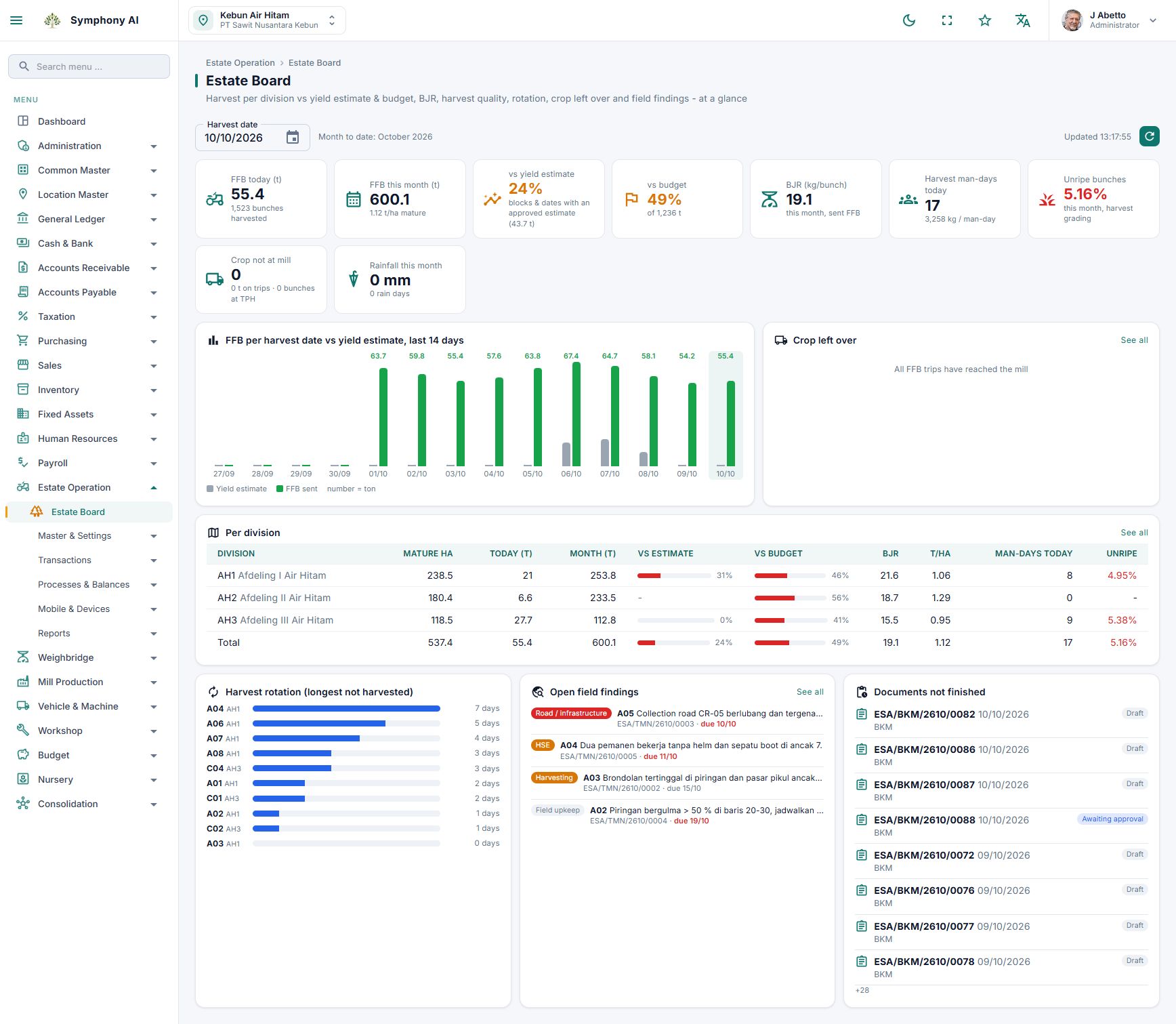
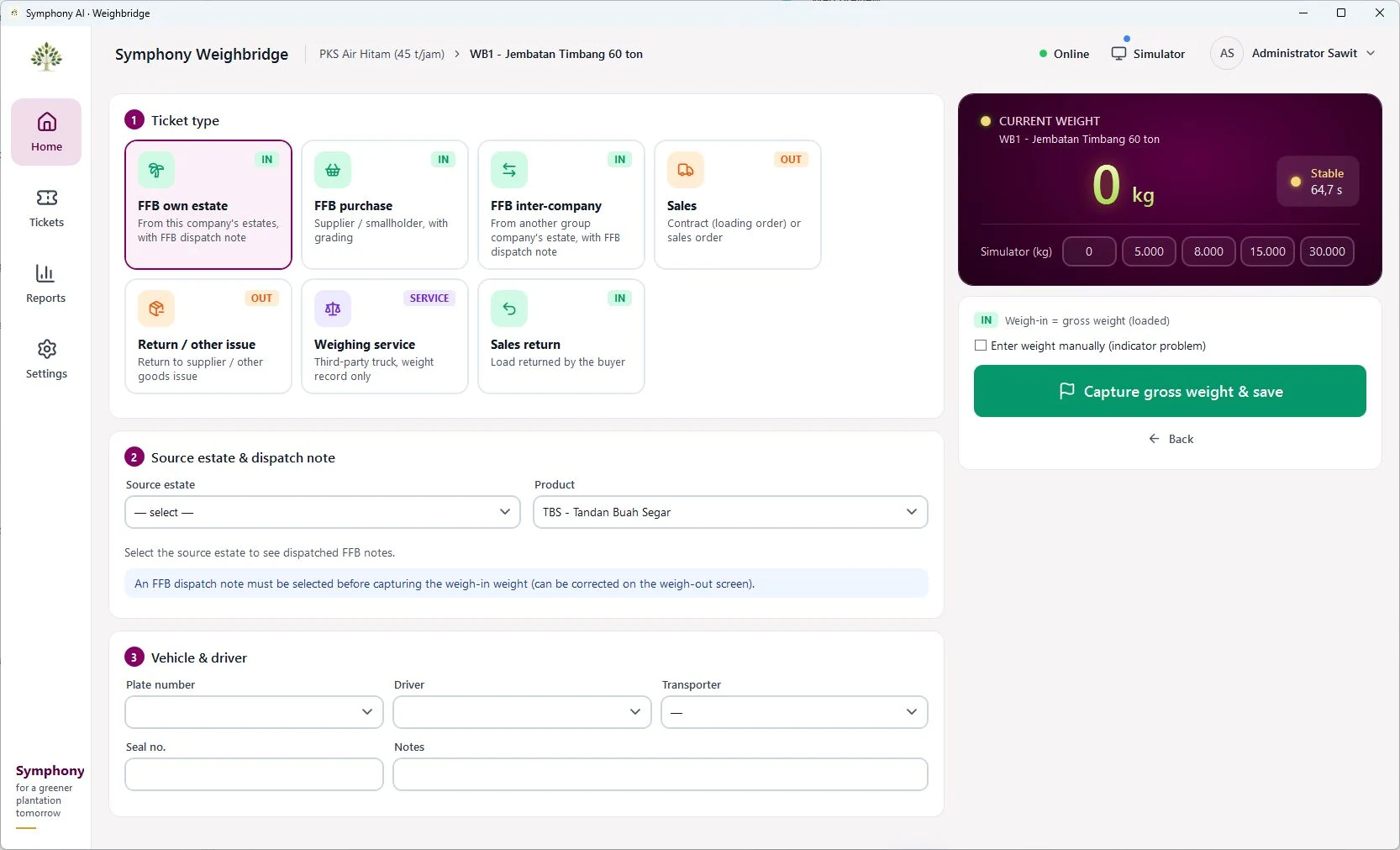
- Field-to-finance links: BKM, harvest, weighbridge and inventory flow into the accounts, not re-typed.
- Integrated payroll costs: estate payroll, premiums, BPJS and PPh 21 posted to the right cost centres.
- Budget vs actual: compare on the same basis, per hectare and per tonne.
- Period close with checks: close per location, run cost allocation, then close the company.
- Consolidation: group chart of accounts, account mapping and consolidation adjustments.
- Audit trail: approvals and data changes recorded with time and user.
Benefits for finance teams
When accounting follows the estate, finance spends time analysing, not reconciling.
- True cost visibility: cost per hectare and per tonne, traceable to the work behind it.
- Faster close: automatic checks across estates and companies.
- Fewer errors: data captured once, not re-keyed between spreadsheets.
- Audit-ready: every figure has an owner and a trail.
- Better decisions: budget versus actual on a consistent basis.
How to move to plantation accounting software
Keep it practical.
- Map cost centres: agree estates, blocks, activities and allocation rules.
- Connect the field: link BKM, weighbridge, inventory and payroll to the ledger.
- Pilot a close: run one location's month-end with real data.
- Validate reports: confirm cost, budget and financial statements with finance.
- Roll out and consolidate: extend to all companies and run consolidation.
Accounting in Symphony: all these features, and more
Symphony is plantation accounting software built inside a full plantation ERP.
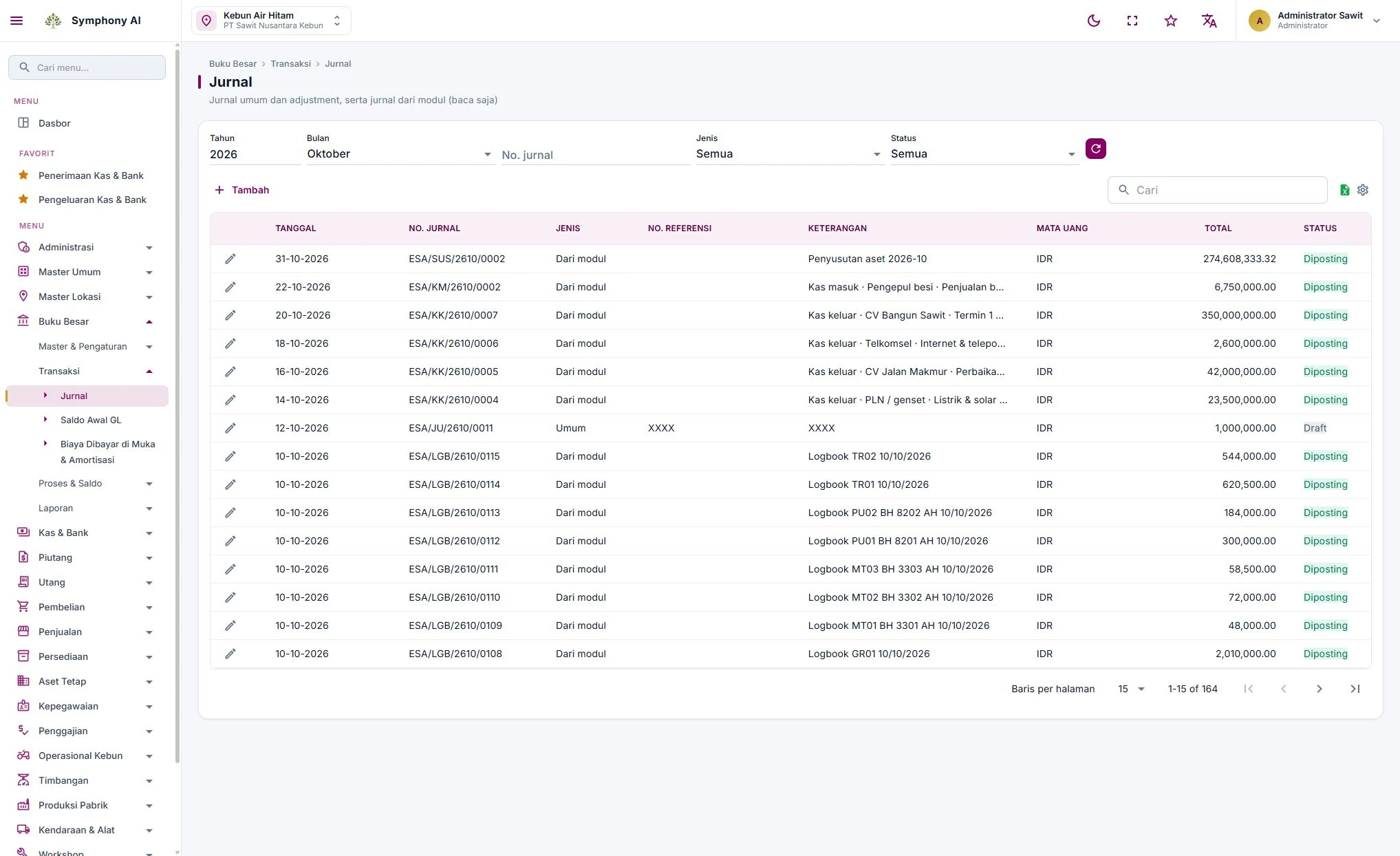
- Full ledger: general ledger, AP, AR, cash, bank, tax, fixed assets and budget.
- Cost centres: mapped to estates, blocks and activities, with cost allocation rules.
- Field to finance: BKM, harvest, weighbridge, inventory and payroll feed the accounts.
- Period close: close per location, allocate costs, close the company, with an AI month-end assistant.
- Consolidation: group COA, account mapping, inter-company monitoring and adjustments.
- Beyond the basics: cost per hectare and per tonne, HPP for estate and mill, and a full audit trail.
Take this to your finance review
- Check whether costs map to blocks and activities.
- See if field, payroll and inventory post automatically.
- Test a month-end close with real data.
- Confirm budget vs actual per hectare and per tonne.
Common questions
Is plantation accounting software the same as an ERP?
It is the accounting part of a plantation ERP. In Symphony, accounting is integrated with estate, mill, inventory and payroll in one system.
Can it handle multiple companies?
Yes. Symphony supports multiple PTs and estates with inter-company balances and consolidation.
Does it show cost per hectare and per tonne?
Yes. Cost centres tied to estates and blocks produce cost per hectare, per tonne and HPP.
See the finance and accounting module and discuss how it fits your estates.
View finance module →