Plantation Management System: 7 Features a Good One Needs
An estate runs on many moving parts — field work, harvest, weighbridge, mill and finance — and spreadsheets cannot keep them aligned. This guide explains what a plantation management system is and the seven features a good one needs.
Key takeaways
- A plantation management system runs the whole estate operation in one place, from field work to finance.
- It is also called estate management software or agriculture/agribusiness ERP when it includes accounting.
- A good one is built around plantation structure — blocks, planting years, BKM, TPH and weighbridge — not a generic app.
- The real value is linking field work to cost, so management sees cost per hectare and per tonne.
What is a plantation management system?
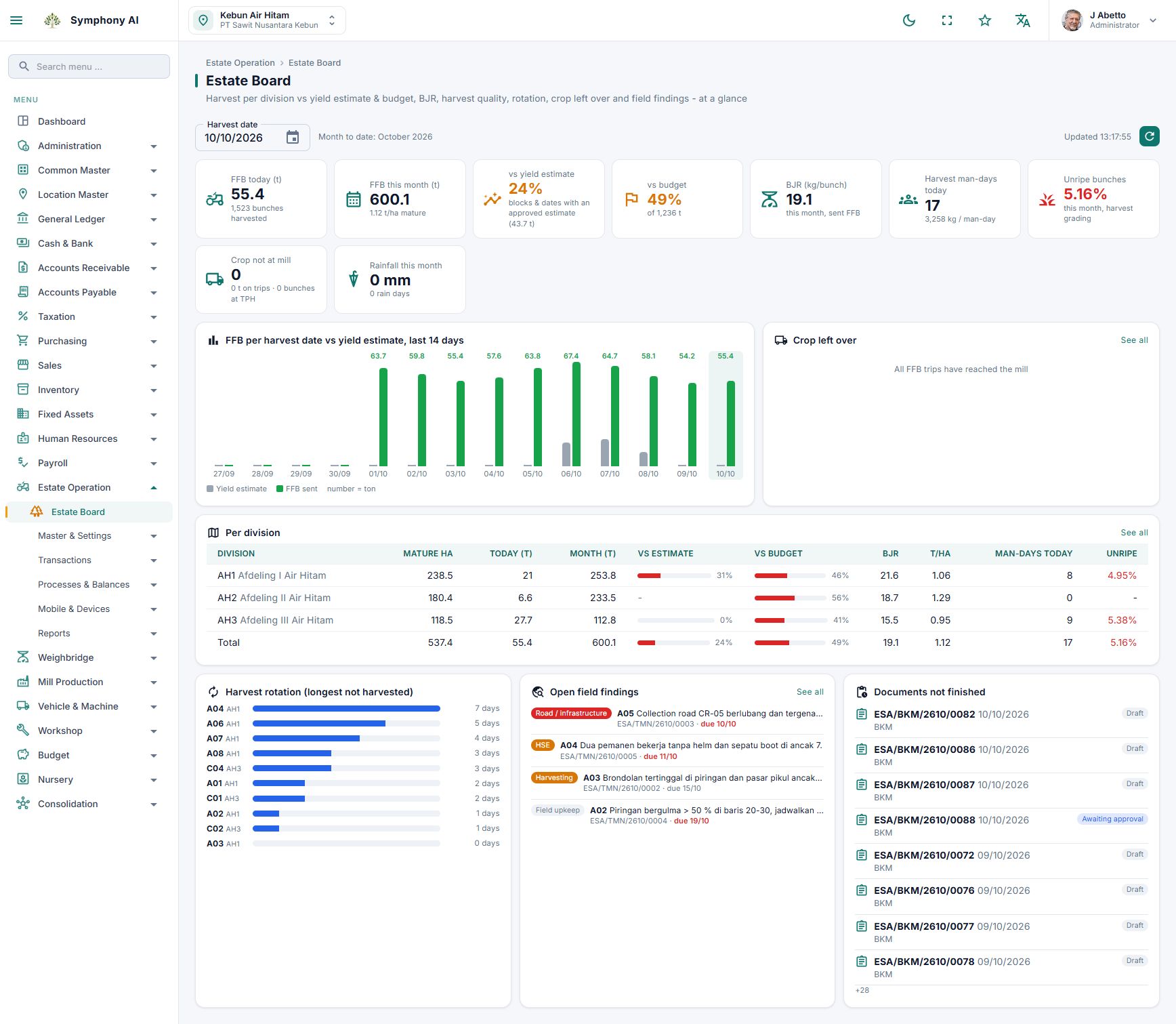
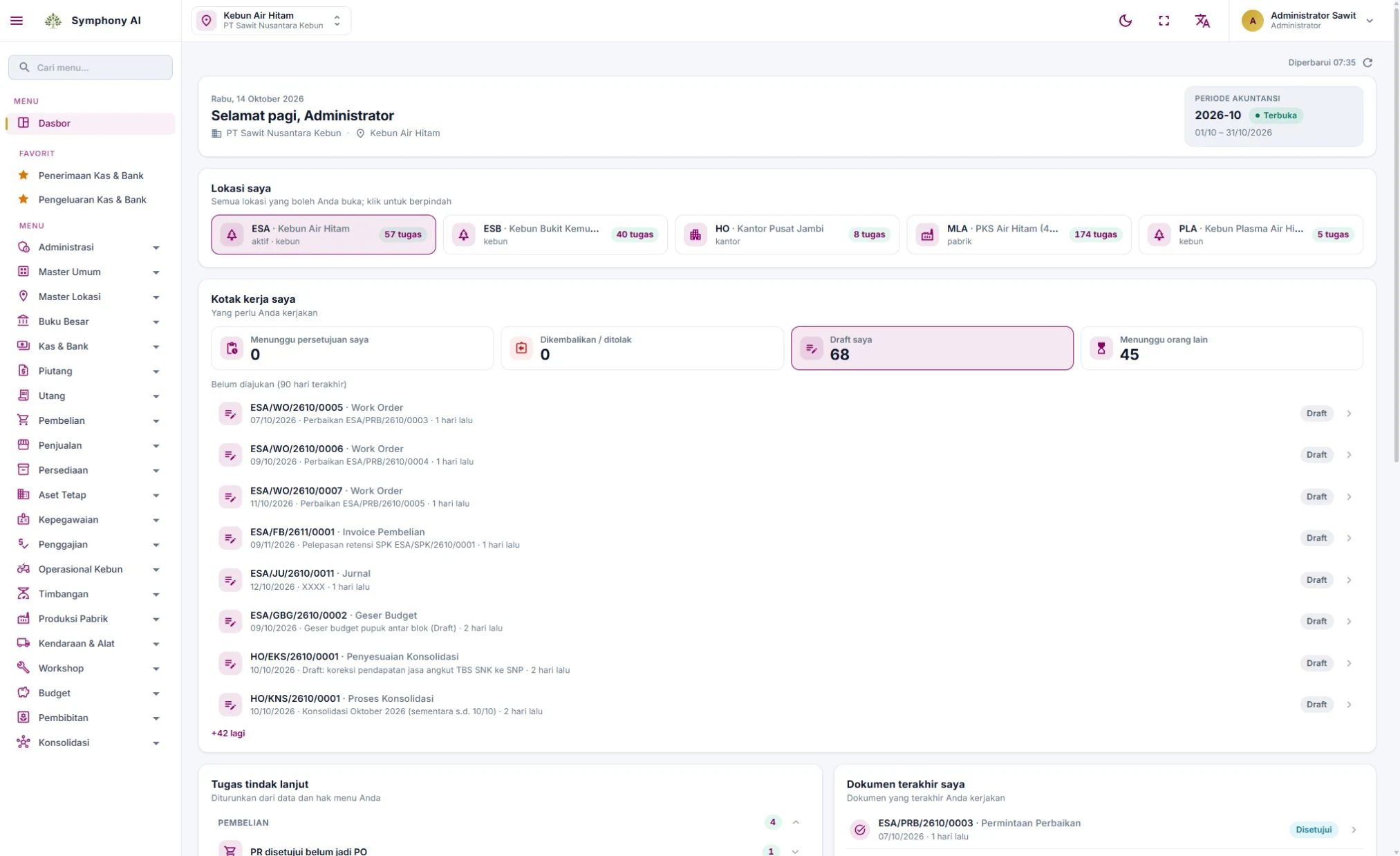
A plantation management system is software that manages an estate company's whole operation in one place, and links that work to cost and finance.
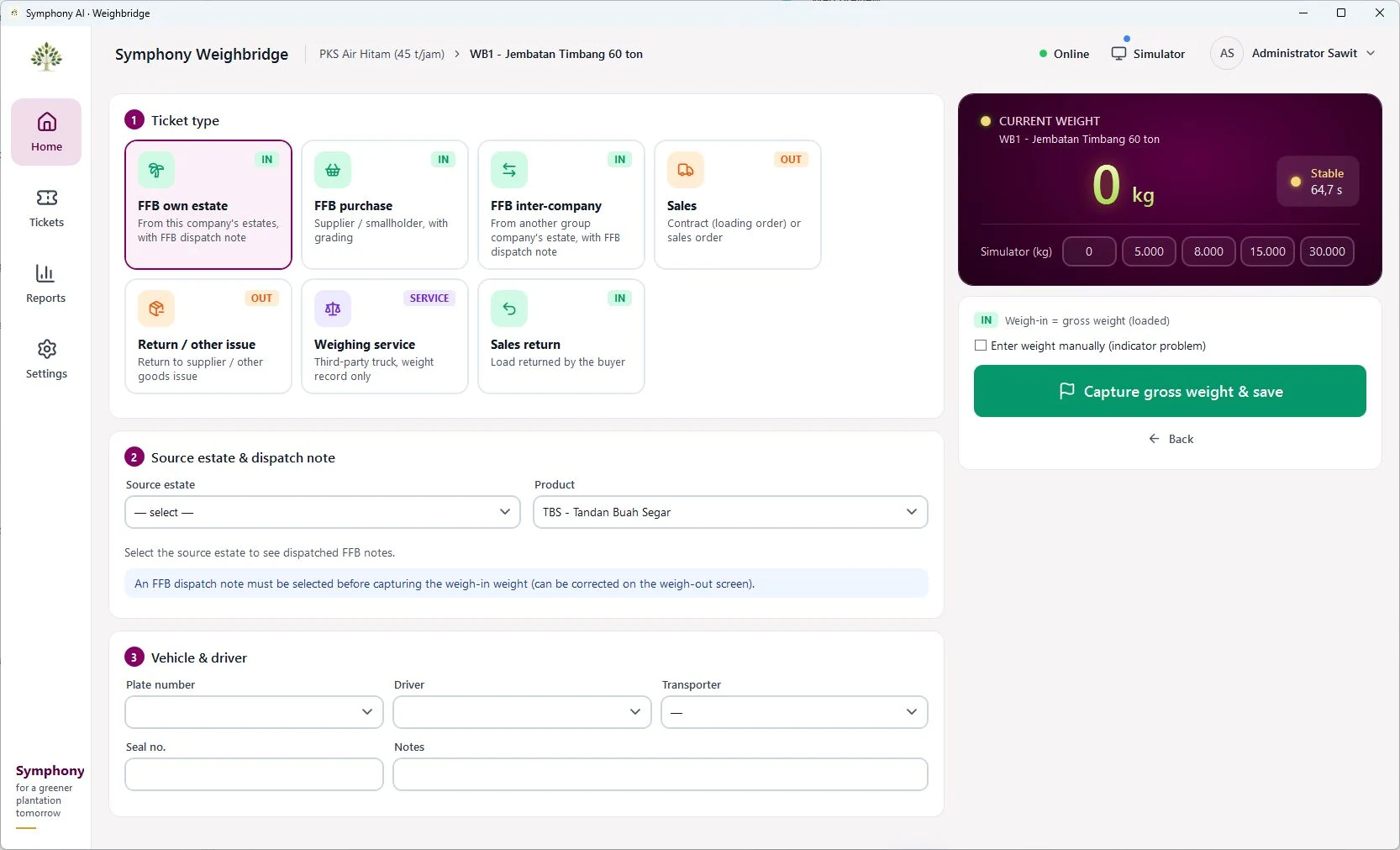
- Scope: estate operations, harvest, weighbridge, mill, purchasing, inventory, finance, HR & payroll, GIS and mobile apps.
- Other names: it is also called estate management software, plantation management software, agriculture ERP or agribusiness ERP when it includes finance.
- Built for plantations: it follows estate structure — divisions, blocks, planting years, BKM, TPH and weighbridge — not a generic business app adapted later.
- The point: every activity is tied to a cost centre, so results and costs can be read per block, per hectare and per tonne.
Plantation management system vs generic farm software
Many farm or agriculture apps record activities but stop there. A plantation management system connects the whole chain.
- Work to finance: field records flow into purchasing, inventory, payroll and accounting, not just a task log.
- Multi-estate & multi-company: several estates, mills and companies run on one system with consolidation.
- Mill and weighbridge: receiving, weighbridge, production and processing costs are included, not only the field.
- Traceability: for export commodities, origin and EUDR traceability follow the product to the shipment.
7 features a good plantation management system needs
Use these to compare systems side by side.
- One integrated database: estate, mill, HR and finance share documents, so data is never re-typed.
- Offline mobile field recording: field staff record work where there is no signal, then sync.
- Plantation-specific structure: blocks, planting years, BKM, TPH, grading and weighbridge are built in.
- Checks and approvals: submissions are validated and approved before they are posted.
- Multi-company and multi-location: several companies and estates run on one system, with consolidation.
- Management visibility on mobile: production, cost against budget, cash and approvals on the phone.
- AI assistance and traceability: AI explains reports and speeds up the close; EUDR traceability for export crops.
Benefits of a good plantation management system
When the system connects the whole operation, management stops guessing.
- Complete, traceable costs: cost per hectare and per tonne, traceable to the work behind them.
- Faster, cleaner close: period close runs with automatic checks across estates and companies.
- Fewer errors: data is captured once and validated, not re-typed between spreadsheets.
- Clear accountability: every record has an owner and an approval trail.
- Better decisions: managers compare actual against budget on the same basis.
How to choose a plantation management system
Start from how your estates actually work.
- Map your operation: list estates, mills, cost centres and approval roles.
- Check the field app: test recording and syncing where there is no signal.
- Pilot with real data: run one location with real sample records before rollout.
- Validate reports: confirm harvest, weighbridge, payroll and finance reports with the teams.
- Check the vendor: look for plantation experience and a clear implementation method.
Symphony: a complete plantation management system, and more
Symphony is a plantation management system and a full ERP in one, built for estates.
- One system: estate operations, weighbridge, mill, purchasing, inventory, finance, HR & payroll, GIS and mobile apps in one database.
- FieldMate & Insight: offline field recording and management on mobile, with AI summaries.
- Plantation structure: divisions, blocks, planting years, BKM, TPH, grading and offline weighbridge.
- Multi-company: multiple companies and locations with consolidation and period close.
- AI and EUDR: report explanations, approval summaries, a month-end close assistant and EUDR traceability.
- Every commodity: oil palm, rubber, coffee, tea, cocoa, coconut, sugarcane and seasonal crops.
Take this to your next review
- List the parts of your operation not yet in one system.
- Check whether field work links to cost and finance.
- Test the field app offline.
- Pilot one estate with real records before rollout.
Common questions
Is a plantation management system the same as an ERP?
They overlap. A plantation management system that also handles finance, purchasing and HR is effectively a plantation ERP. Symphony is both in one platform.
Is it different from farm management software?
Yes. Generic farm software records activities; a plantation management system links field work to weighbridge, mill, cost and finance across estates.
Which commodities does it support?
Symphony supports oil palm, rubber, coffee, tea, cocoa, coconut, sugarcane and seasonal crops.
See the plantation management modules and discuss how they fit your estates.
View the platform →