Controlling plantation upkeep costs against budget
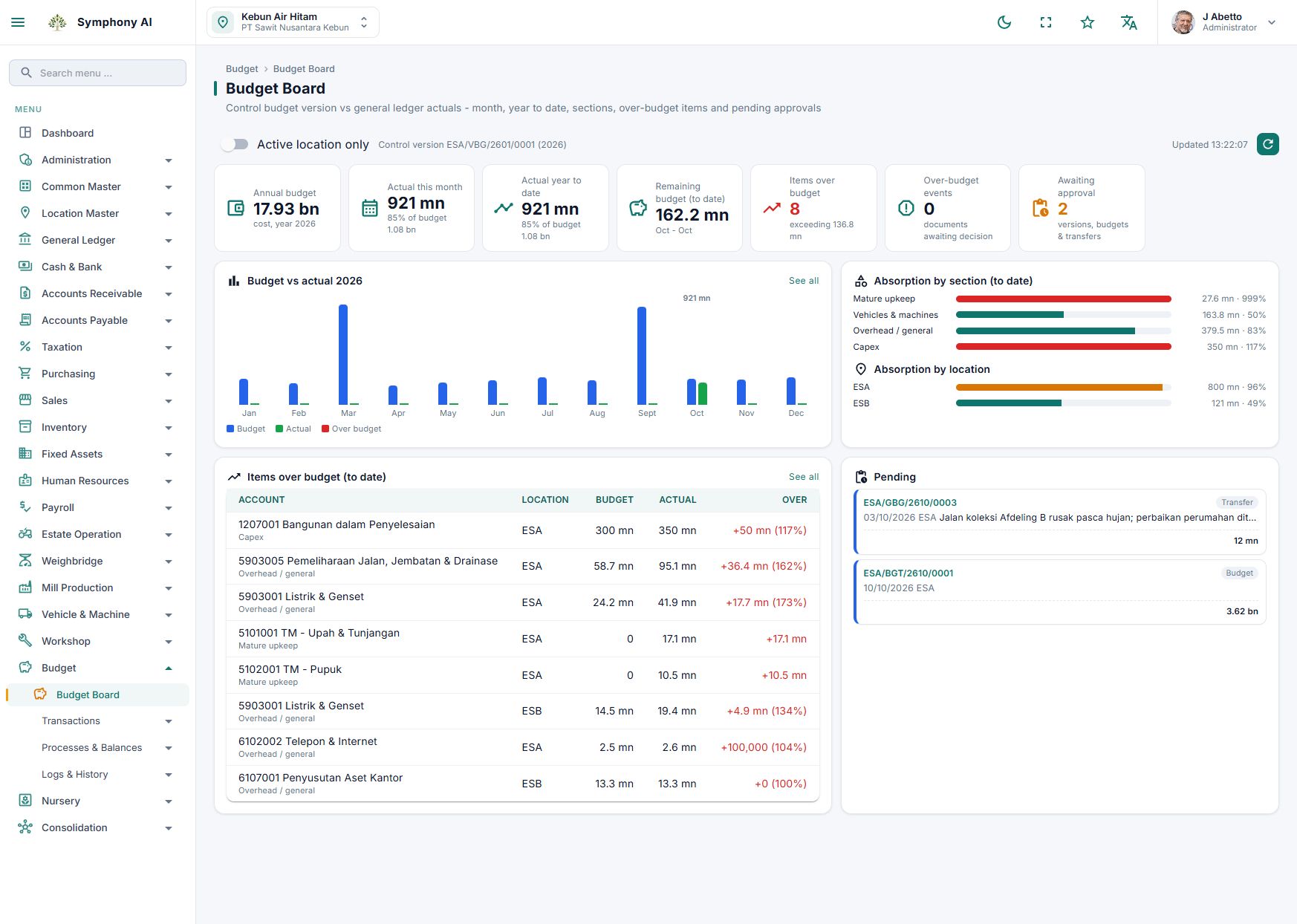
Spending below budget does not necessarily mean upkeep is under control. Work may be delayed, invoices may be outstanding or the completed area may be smaller than planned. Management needs to compare cost with the work delivered and the condition of the estate, using a consistent period and scope.
Build a comparison that means something
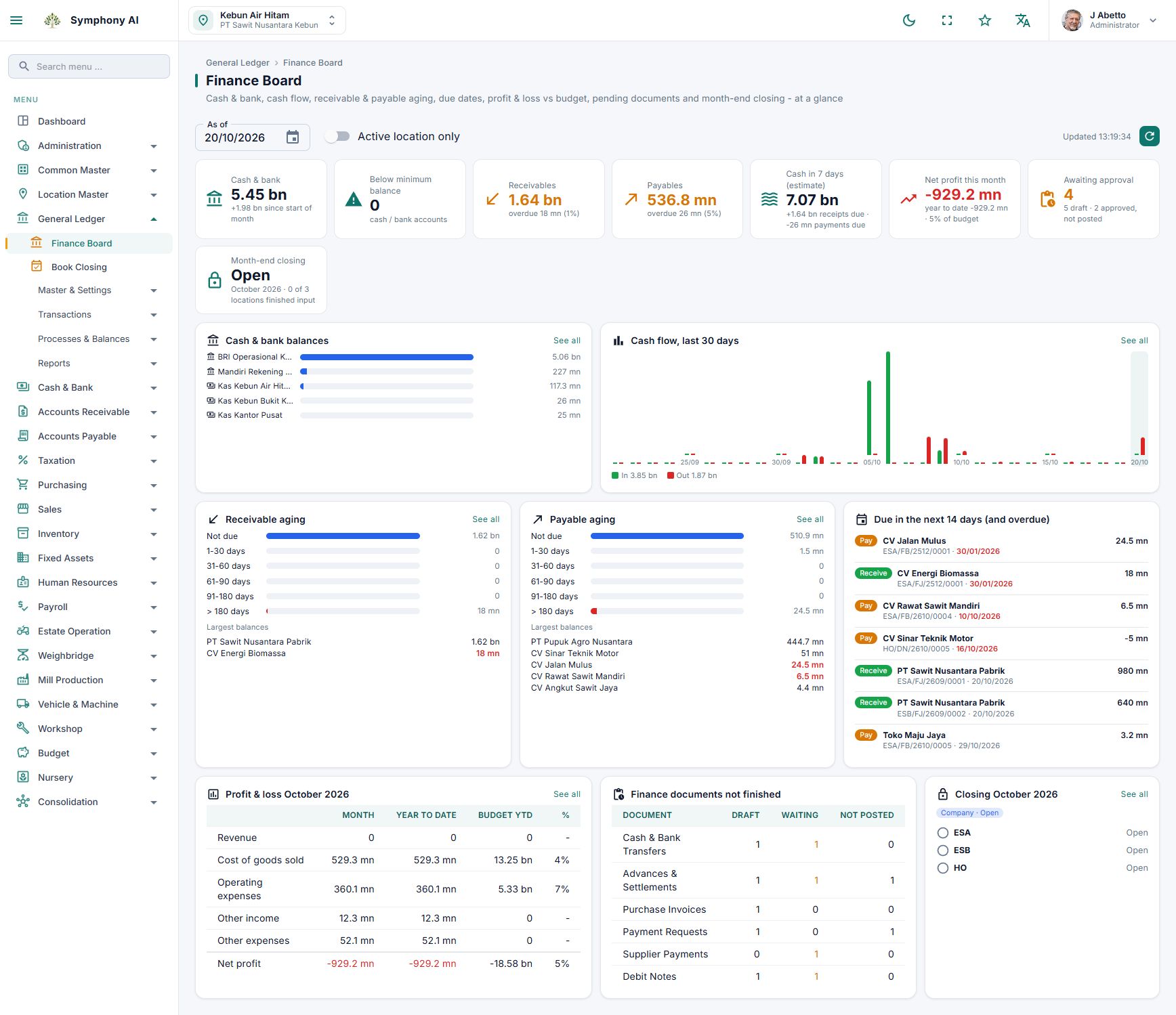
Align the budget and actual figures by estate, block or cost centre, activity and period. Agree whether the report reflects posted actual costs, commitments or both, and label them separately. A purchase order, a material issue and a supplier invoice represent different events; mixing them without a defined basis can lead to double counting or misleading timing differences.
Connect resource usage to completed work
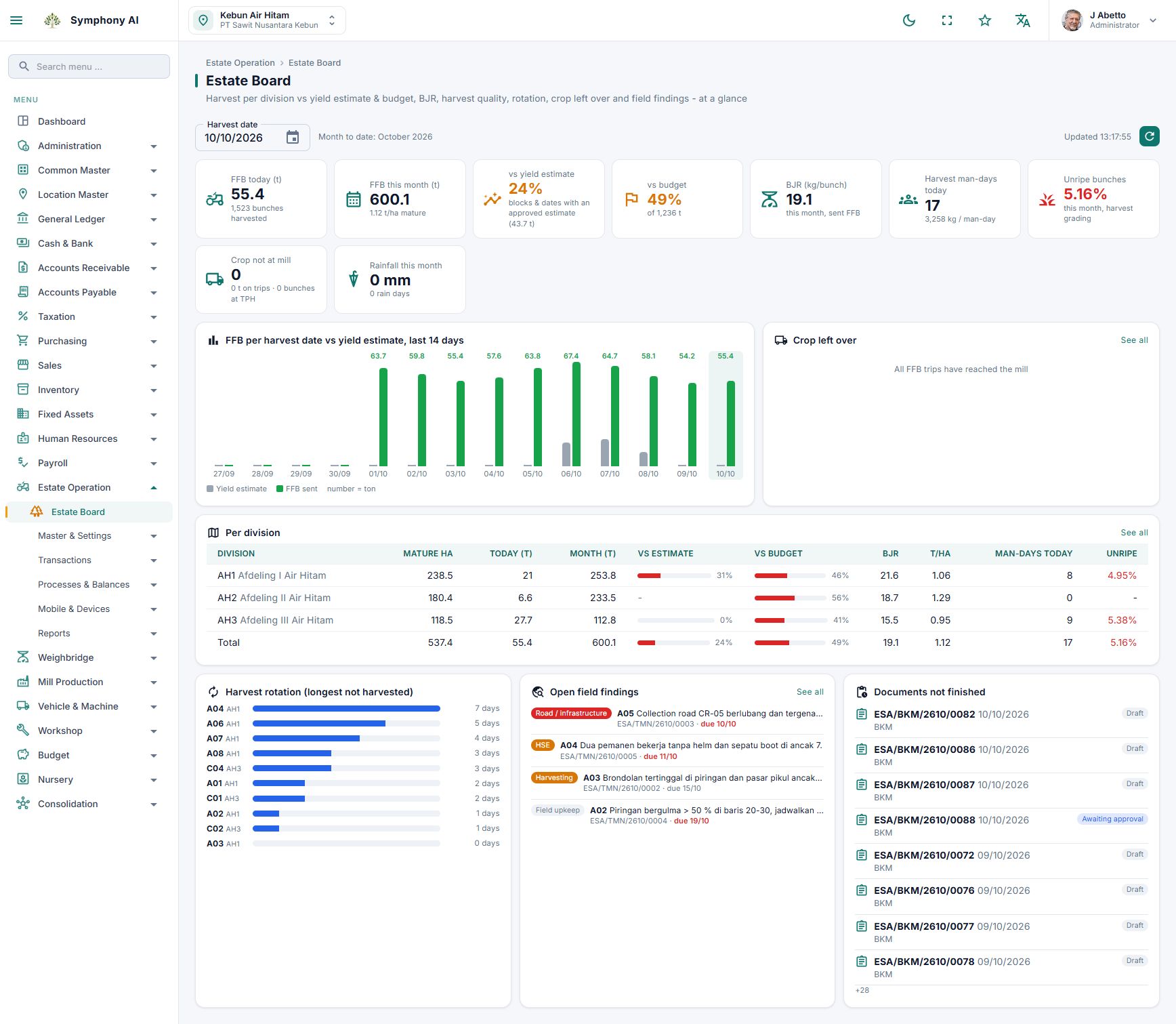
Review labour, materials and equipment alongside the reported output. For upkeep, cost per hectare requires a clear definition of completed area and treatment of repeated work. An apparently low unit cost can be misleading if work quality is poor or part of the planned area has not been treated. Use field records and inspection evidence to explain the result.
Separate the possible causes of a variance
Ask whether a difference comes from the volume of work, resource consumption, unit price or timing. For example, higher material cost may reflect a larger completed area rather than waste. A delayed activity may create a favourable cost variance today while increasing the operational risk next month. Review the cause before changing the budget or blaming the team.
Turn the review into a follow-up decision
For each important variance, record the explanation, responsible person and next action. Decide whether to verify the field record, review procurement, adjust the work plan or investigate an exception. Check the next period for the outcome instead of repeatedly discussing the same unexplained percentage.
Use a connected management view
Symphony brings plantation work records, inventory, finance and management views into the same product ecosystem. During implementation, agree the costing rules, budget dimensions and approval process for your organisation. The management view should help a director move from a summary to the team responsible for explaining it, with report access appropriate to their role.
Take this to your next review
- Match period, activity, location and accounting basis.
- Separate commitments from posted actual costs.
- Compare spending with completed area and work quality.
- Investigate volume, usage, price and timing differences.
- Assign an action and review the outcome next period.
A common question
Should lower spending always be treated as a saving?
No. First check whether the planned work was completed, costs were recorded and the expected quality was achieved. A delay or missing invoice is not an efficiency gain.
Review the product screens and discuss how the workflow fits your organisation. Availability and integrations follow the agreed implementation scope.
View product details →